Read on for the full transcript:
Ian Sandusky (0:04)
I think when it comes to creator marketing, you're seeing that kind of happen now, where you're seeing a lot more opportunities for creators, which is fantastic, but you're not seeing a lot of companies necessarily utilizing them the right way.
David Fabbri (0:15)
Right.
*music plays*
David (0:21)
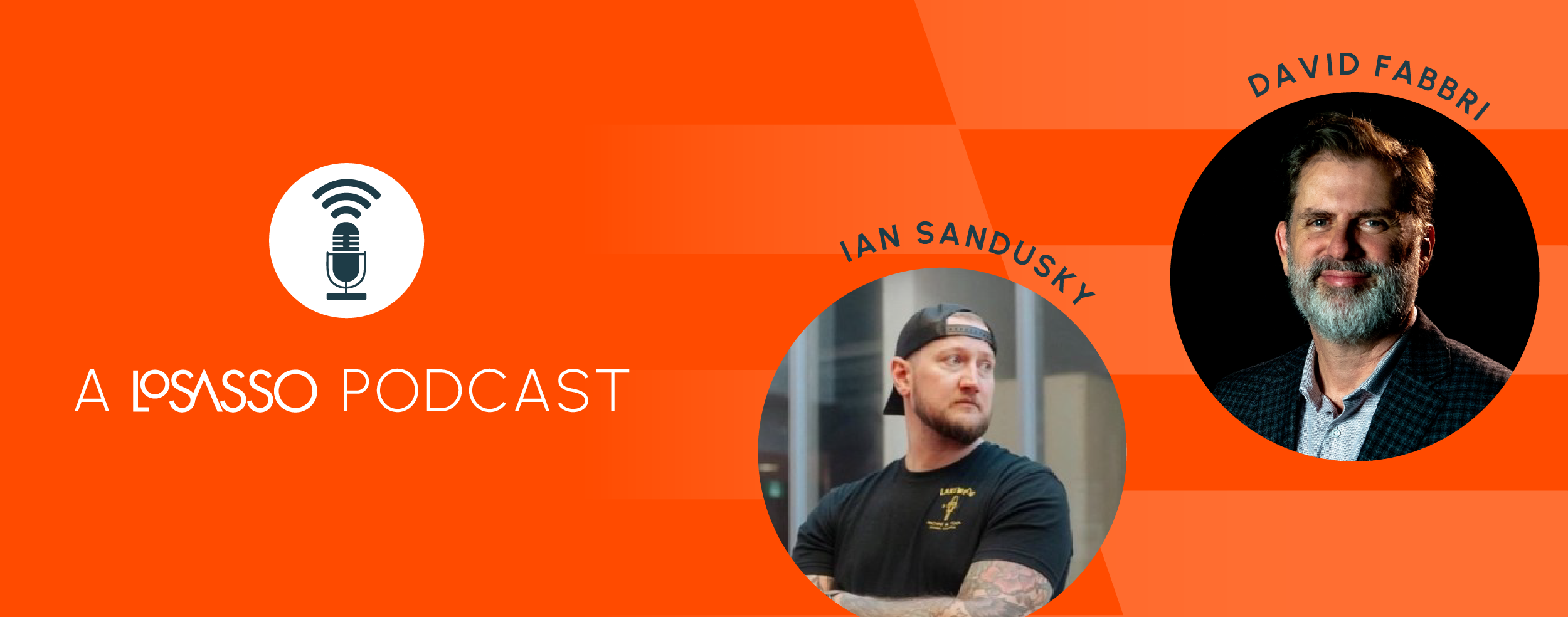
Hey everyone, welcome to the latest episode of the Lasasso podcast. Today, we're diving into B2B influencer marketing, how it's continuing to evolve, and really elevating its role in the B2B
marketing mix. I'm joined today by Ian Sandusky, job shop owner in New Market, Ontario, and a leading voice in the CNC machining and manufacturing space.
David (0:40)
Ian is also an influencer partner with Practical Machinist, North America's leading metalworking forum and social media ecosystem. So Ian, I mean, let's start there. Can you tell us a little bit about Practical Machinist, sort of your partnership with them, and how you got started as an influencer?
Ian (0:57)
Yeah, so I started working at my dad's machine shop probably around 2004, 2005 as an apprentice here. And you know, I kind of worked here in the summers. I worked here on holiday. Went to university and then ended up coming back here and working full-time. And this was right around when social media started to, you know, really become a thing. Especially with Instagram and everything like that.
Ian (1:23)
So, I ended up starting an Instagram account for Lakewood Machine and Tool, the company, as a way to try to drum up some business and have a little bit of fun. And after I had that going for a little bit, I opened my own YouTube channel just for fun called Let's Machine. Um, I had that running for about 5 years, just doing kind of uploads, trying to run a small machine shop.
Ian (1:49)
You know, trying to really address the niche that I didn't see a lot of content on. There weren't a lot of running small shops on, you know, small mom and pa shops, you know, in the machining space. It was all very, very large stuff. So, I tried to do that. And then, Practical Machinist at that point was looking to get into video content. So, the person who was in that
role at the time reached out and said, "Hey, we like your content. Are you interested in uh in doing some content with us, and you know, six years later, here we are."
David (2:23)
Yeah, that's great. So, when you were getting going on your own channel, I mean, how long did it take to get traction there? I mean, obviously, at the time, it was still relatively new, and you didn't have that exposure. Um, what was that what was that what were the early days like?
Ian (2:41)
Yeah. So, the early days were predictably tough. I feel like it's probably a little bit tougher of an ecosystem to get started these days because there's just so much more attention put on social media than before. You know, YouTube is the new TV. I don't know if it was necessarily like that 10 years ago when I started, but uh yeah, it was rough. It took a long time. I only ended up getting about 7,000 subscribers on that channel.
Ian (3:06)
I had a lot more success growing the Instagram channel and the biggest thing in there was just consistency, posting consistency on both the social networks and on YouTube, you know, if you want to call that not necessarily a social network, although I guess it is now and uh, you know, just constantly producing content and trying to think of things to talk about.
David (3:30)
So, you know, you talked about some of the stuff that you were trying to fill that really wasn't available in the space and some of that was obviously about, you know, machining and some of that, but you said also about running the shop and, you know, uh, talk to me about kind of how you ended up in that in that area and what what stuff, you know, attracted the most attention.
Ian (3:47)
Yeah. So, it's funny when I first started doing YouTube, I focused really heavily on the machining aspect of it. So, lots of machining footage, you know, chips flying, you know, running endmills, running lays, and that stuff did okay. It did, you know, it performed. And then I remember one day I had nothing to show, but I was like, man, I'm supposed to upload today. So, I said, "All right, I'm just going to talk about what's going on in my shop and what I think might be a solution." And I called that episode a shop talk.
Ian (4:18)
And that ended up getting way more traction than anything else. So then I started alternating, you know, more project videos or machining v videos with the shop talks, and the shop talks just kept getting more traction, engagement than anything else. So that's why I kind of ended up, you know, by the time I got with Practical Machinist, really leaning into that, where we still do content based on, you know, actual physical machining processes, um, you know, the more technical aspect, but we also talk about running a shop.
Ian (4:49)
And I think the reason that did well was that you'll see a lot of really high-level corporate content out there. Maybe not a lot, but there's high-level corporate content out there that exists that's not relevant to the small guys. And then there's maybe the one-man show content where it's a guy, you know, taking you through a project, but there's not a lot in that kind of mid-range where, hey, I'm a guy who has a few employees. Um, I'm trying to run a business. So, I thought, hey, let's kind of double down on that.
David (5:19)
Yeah. I mean, and let's talk about that a little because I think, you know, that's really to me what seems so powerful about the influencer space, right? Is that you see people who are doing what you do or doing it a little bit better than you do, right? And you want to learn. There's so much you can get. Um, and corporate content is one thing, right? But it always has a certain motivation behind it, right? And I think when you got an influencer, it certainly is or feels like it's much more genuine and earnest. So what's your perspective on that?
Ian (5:49)
I think that's definitely where the kind of rubber meets the road when it comes to, you know, creator-led marketing. Um, I think a big part of it comes from a big company who is creating content. There are a lot of people disconnected from maybe what that company actually does, who are creating the content. At a big corporate machine shop, the people creating the content, if they're trying to, you know, push a product or push a service, they probably are a marketing department, and they may not have the technical knowledge.
Ian (6:20)
They may not be able to spot what's cool or interesting to the people who are viewing. So, you know, when you get to the micro influencer, small creator space, a lot of times it's people showing what they think is interesting to themselves. They're creating the kind of content that they want to see. And I feel that's kind of where the difference lies. You know, large corporate content, I don't think a lot of people who create large corp corporate content spend a lot of time watching that when it comes to, you know, the social media marketing end of things, or at least they're not going to choose to.
David (6:53)
So, you know, it feels like there have been, you know, more and more creators over the last, you know, 10 plus years now, uh, really creating a ton of great content. And certain brands tapped into that early, but it seems like a lot of brands are, you know, getting to it late in the game now. Uh what's you what are you seeing in the space in terms of like sort of people's acceptance of it and use of it that you weren't seeing maybe five to 10 years ago?
Ian (7:20)
Yeah, I think you were 100% correct there. You see a lot of Johnny-come-latelies to the space, which, hey, is a great thing. You know, better late than never. I think the landscape has shifted a lot, where it's kind of like when social media first took off, and every company knew at a certain point they should have a Facebook page, but they didn't quite know why or what to do with it. They just knew that it had to happen. So, you got a lot of really nonproductive social media accounts on the corporate end that come out of things.
Ian (7:50)
I think when it comes to creator marketing, you're seeing that kind of happen now, where you're seeing a lot more opportunities for creators, which is fantastic, but you're not seeing a lot of companies necessarily utilizing them the right way.
Ian (8:05)
You know, they're saying, "Oh, we have to do this," but they're providing too many scripts. They're constraining too much. They have unrealistic expectations for what that is supposed to do. And that's really just an educational thing in my mind. It's uh the same as when you get someone onto any kind of marketing program. You know, they're going to ask for leads from a print magazine. Probably is not going to make sense. Right, it's educating the client or educating the people who want to engage creators as to what it really does,
David (8:38)
Right? In some ways, you know, if you don't help educate them and you kind of are doing things that go against sort of who you are and the kind of stuff that you do, in the long run, you're not really going to be benefiting them, right?
Ian (8:50)
Not at all.
David (8:52)
Because the kind of people who have come to you and are your audience because of who you are and what you do, aren't going to respond well to that. In terms of that also, like what do you think are the positives of sort of additional brands being, you know, sort of activating creators these days?
Ian (9:12)
I think a big positive is I mean I I'm speaking to this from a creator which is you know I kind of do both but for the creator side of thing it's great because it gets more people excited and participating in the space um from the creator side and there's a lot of people who can create really really good content who maybe had been holding off or have been afraid to because didn't seem like there was enough opportunity out there. Oh, all the roles are filled, that kind of thing.
Ian (9:34)
So now that there's a lot more attention on it, you get a lot more people trying. And I think that's a great thing because it kind of is the future of marketing in a lot of ways. To me, from the, you know, companies engaging them side, it's also great because the more companies that get involved, the more creators they get involved, it gives them more options. If you are a company in an industry and there's one or two creators, you may not really align with them well, but if they're the only game in town, you're kind of stuck. If there's a lot more now, you can kind of fit who aligns more with your brand, with your messaging, with your presentation. So, it kind of works well on both ends when there's a lot more activity in the space.
David (10:18)
Yeah. You know, you talked about kind of focusing more on the shop talk end of things. I know, you know, with Practical Machinist, you do a lot of different content. You do shop tours, you do, you know, interviews on the trade show floor, different things. Like what types of content do you find your audience still like sort of most, resonating with? Like what's working best?
Ian (10:41)
It's really interesting because it's kind of one or the other. It's either the really high-level talking about the industry, talking about challenges shops face, you know, the absolutely no machining on the floor content that seems to resonate really well because again, still there's more people talking about it, but it's not a very well-addressed segment, I suppose. And then on the flip side of that, the crazier you can do machining content with, you know, less talking, less intro, less commentary, also seems to perform very well.
Ian (11:14)
There's a healthy mix there that's still in the middle that does well, but you know, with everything polarizing, it seems those two things are doing the same thing. And then tours, of course, tours are super, super well-performing. And I think that's just the nature of everybody wants to see inside another shop. You know, you want to see how the pros do it. You have, you know, as you said earlier, you want to find out how the companies that you respect and the people you respect do things. And hey, we get to go in there and show you. People are going to watch that.
David (11:48)
Yeah. I know, a lot of times, right, you see uh see the way it is someone somewhere else, and you're like, "Oh, yeah. We're all right." You know, we're doing it all right. You've got that comparative, right? Or to your point, you know, you see something that's really exceptional and you're like, "Okay, how do I emulate that?"
Ian (12:02)
Yeah.
David (12:04)
Um, so you've obviously had a different sort of journey because of your affiliation now with the practical machinist, right? Uh, that sort of has expanded your audience. Um, in what other ways do you think that sort of partnership has been beneficial, to you and to them?
Ian (12:22)
So to me, I mean, how can I count the ways? Um, when I first started doing content with Practical Machinist, and to this day, I have worked at one machine shop ever. My experience is limited in terms of what I've seen out there. You know, most machinists will bounce around between, you know, three, four, or five shops, learning a little bit and getting to check out a little bit along the way, so they get more exposure. I didn't have any of that. I've been at one shop for, you know, over 20 years.
Ian (12:51)
So, number one, getting out there, getting to meet other people in the space, getting to check out new technology, getting exposed to the industry at large has been a hugely beneficial growth thing for me as a shop owner, as a machinist. Um, aside from that, you know, the partnerships that we work with, tooling companies, machining companies, uh, tool builders, machine builders, the amount of new technology I've been able to get in here, you know, as a benefit of Practical Machinist has been massive.
Ian (13:24)
You know, letting us try out new stuff that we just wouldn't have an opportunity to do otherwise, without spending a lot of money. Um, that has been massively beneficial. You know, for me and my guys, getting to you know not feel like we're getting left in the dirt because we don't have this budget or that budget. And then on the Practical Machinist side, you know,w I think it's been a fantastic partnership. You know I'm exclusive with them, and I wouldn't have it any other way. Uh, the reason I think it works so well is that Practical Machinist is about the machining community. And although I happen to be a member of that community that speaks on camera to it, I'm just
another member of that community.
Ian (14:03)
And there's no one else out there like that in this space doing that. Um, you know, it's not it doesn't feel like a strictly commercial or promotional endeavor that way. And because of that, the content we create is for the community. It's very authentic. It's everything has to be tied into either education or entertainment. There's nothing that is strictly promotional, and because of that, it performs well, and we get an audience that continues to come back and engage. So I think that kind of symbiosis kind of works out quite well.
David (14:36)
Yeah. And uh the other thing is you know I think people knew about influencers you know years back when it was more on the consumer side but it really has you know you've seen that elevation in B2B and you know from our agency perspective we continue to see you know the sort of increasing opportunity in the space right because you've got you know somebody who has credibility uh knowledge is a subject matter expert can create content it's just a great sort of way to get a lot and continue to do uh do more effective sort of integrated campaigns with that being an important piece of it. So I guess the next question for me then would be, you know, in terms of the collabs you've done with you know specific brands, what's the most successful one been like, and what did that look like?
Ian (15:31)
So the most successful one was actually a bit of a surprise. So we have multiple different kinds of packages. I hate to use you know the term package but packages that we put together for brands. So some of them involve long-form video content. Some of them involve what we call UGC: user-generated content. So shorter, you know, 30 to 60sec reels on social media. And this one was a UGC program for a workholding brand. And they sent me a box of tools to try out. They didn't give me a lot of background. They said these are cool. Take a look at them. And so we developed, I say developed, it was very authentic. I was like, these things are awesome. Let's see how they work. Put up three under one-minute reels.
Ian (16:19)
And of those three products, I know at least two of them two of them sold out completely within it must have been a month. They actually had to ramp up production at their facility to get these things back in stock, and it was completely unexpected. Um, but it was a really good illustration of if it's a, you know, no matter what, no creator can make a bad product look good, it's going to come off inauthentic. But if it's a cool product and it's in the hands of someone who knows why it's exciting and can show why it's exciting, it works. It really, really works.
David (16:55)
Right. Right. You've got to get that out in front of people, but instead of like, hey, here's this thing. Let me try to get your attention to look at this ad or something that's going to tell you about it. And you're not really going to necessarily be tracking with those benefits or believe them, right? Coming from that context, right? Or having somebody who you've seen before, you know, and trust, just trying it out, right? Not even like with an agenda, but like okay, let's just check it out and like, you know, make some chips and figure out how this thing works and get excited about something. I could see where that would be super effective.
Ian (17:27)
We always say it's well, I don't know if we always say, I always say it's like, you know, when we do trade show content, or when we do UGC, it's not an infomercial. It's your buddy showing you something he thought was cool. You know, if I walked out to my buddy and said, "Have you seen the latest thing?" They would think I'd lost my mind. But I would say, "Yo, check this out. This thing's really eth. Here's why. That's what's actually effective.
David (17:50)
So, you know, if for companies that have been kind of intrigued by the idea but haven't pulled the trigger, because they're not sure how to do it, you know, what's your sort of advice to companies for, you know, sort of engaging uh creators and figuring out how to form a partnership?
Ian (18:06)
Yeah, definitely. So the number one concern I think brands should have in mind is finding creators or putting high on the list when they're looking for creators to make sure that the content that they already create aligns well with their goals or their brand. That doesn't necessarily mean that you know it's one for one. So they use the same marketing language that the company uses, which you know appears exactly the way that the company wants to appear on its content. But making sure that they're not going to try to round peg/ square hole a creator right off the bat.
Ian (18:42)
A creator can have 500 million followers, but if they don't really fit your brand identity or they don't, they're not conducting themselves in a way that aligns with your brand, that's going to be a disaster right off the bat, and it's not going to be a very good use of, you know, money and time. So, finding even smaller creators that are kind of already saying what you want to say for your brand is kind of reflecting the brand values. um can actually be a lot more effective than larger followings. And I mean, if you can find one with a larger following that also aligns, hey, all the better. But don't discount some of the smaller, you know, 10, 20, 30,000 uh followers or subscribers off the bat because they probably have a very, very engaged audience despite their size.
Ian (19:25)
Once that's kind of done and you've kind of identified, hey, these three are cool. generally trying to talk to them, find out what they do. Are they authentic? Um, you know, as the creator economy has continued to get bigger and bigger, I don't want to say there are people misrepresenting themselves, but people may not. You may find out that they are presenting themselves in a certain way, but behind the scenes, they may not be authentic to what they're showing. And that's okay. You know, it's a business, but you want to do your due diligence after you've already selected them to make sure that they are who they say they are, they're doing what they say they do. Um, because that can blow up in your face as well.
Ian (20:05)
And once you've got that narrowed down, basically, it's having a conversation to say, you know, this is what we're looking to do. Have some very tight constraints on the program expectations. So, you know, with content length, content frequency, uh, your release schedule, all that. And in my opinion, try to be as loose as possible on the actual content creation.
Ian (20:28)
How do I put this? Try to be as loose as possible on the content that comes out in terms of what it is. The tighter you get with a creator in terms of giving them a script, uh, giving them constraints on words they have to use, giving them, you know, as many constraints as you pile on it, it gets less and less authentic and therefore less and less valuable the more you stack on it. So if you've selected somebody that already works really well with your brand and aligns well, hopefully, you have to do as little hand-holding as possible after you know the overall ideas are conveyed.
David (21:01)
And you know just in terms of even doing the content and having good flow in it right you know if you know the stuff uh you know you're talking about the stuff that it's exciting to you know it's going to be a different kind of a path that the thing takes than if you're really trying to force in you know certain points or whatever and it could really kind killed to your point the authenticity of it and the energy and excitement around it. So I guess along those lines uh in terms of you know tough brands to work with have you ever one had you know an experience where uh the product was just something where you're like you know what I can't do it I got to turn it down or you got into it and it was just so difficult uh with what they wanted you had to kind of uh abandon ship on it?
Ian (21:48)
I've had both happen. Fortunately, both were fairly early in, you know, the creator career, I guess, as it were. It's happened, and it's I'm glad it happened because when you first start doing content creation, you get your first opportunity and your second and your third, you're excited and you don't want to say no to anything. So, you'll kind of overlook maybe a brand misfit. You know, if I have a shop full of mills and this is really something better for a lathe, but this brand's cool and I want to work with them, you might say yes when you should say no. Um, so that has happened, and fortunately, there was no real damage done. It just wasn't as effective as it could have been, and then at the end of things, where we've engaged with a company, got the product, and then found out this isn't really what it says on the tin. You know, we were promised this. This is not really what it is. We're not saving time. We're not saving money.
David (22:44)
You don't want me to talk about what I'm really seeing here.
Ian (22:47)
Yeah. And you know, you don't want to obviously badmouth the brand that you're working with. But you also don't want to misrepresent what you are experiencing. That was a difficult situation to navigate. You know, fortunately, it turned out okay. Found them a better creator who works well with them. But it's something that will come up if you're on the creator side. And as a brand, if you are engaging with creators, this goes back to trying to make sure that you understand the capabilities, the constraints, whatever of the creator before you get into it. So, if they say, "We agreed to three 60-second videos," and you're expecting a 20-minute video, no matter what you do, nothing's going to really rectify that. You know what I mean?
David (23:27)
And how detailed are those sorts of packages, as you call them, you know, in terms of expectations typically? Are there a lot of like okay I need this many, you know this length, or is it more like hey here's the product, here's what I'm trying to do, what do you think I should do
Ian (23:44)
So at the beginning, there were a lot more constraints. I don't want to call myself a known quantity, but until kind of people were more familiar with what I did, typically it's like you know for the UGC program, hey, we want to do one post per month over three months, length between 30 and 60 seconds. And then for the longer form content, typically I'll have a meeting with the company first to make sure that my idea aligns with what they're doing rather than and that's important because I want to make sure my the idea I come up with reflects what they want to do rather than them telling me what I should be doing because again, I feel like that kills the authenticity. And maybe it's a diva move or whatever, but I just feel like it kind of keeps it from coming off like an infomercial, which is 100% what you want to avoid.
David (24:37)
So then I guess any closing words, any final thoughts before we uh call it a day?
Ian (24:42)
Yeah, I mean, I would just say, you know, if you are someone who's looking to get into doing content creation, I still don't think it's an oversaturated market, even if it is a more saturated market, because no one's you. You know what I mean? No matter how many machining channels, skateboarding channels, whatever, you are not doing it. So, therefore, there's still a space there.
Ian (25:02)
Make content that you would want to watch. And if you're on the brand side, engage with the content that you enjoy watching. You know, don't go for this guy just because he's got a lot of followers. Go for it because your guys enjoy watching it. Go for it because, you know, it reflects your brand well, not necessarily just chasing numbers. Because you can pay for numbers in this economy. You can't pay for engagement. You can't pay for content that actually does something just by throwing money at it.
David (25:32)
You know, that's a good point. We sort of have talked around it, implied it, but I mean, part of this is about uh, you know, more tapping into micro influencers, right? Versus assuming an influencer's got to be some huge thing. I think, you know, that's from a marketing side and sort of a value perspective. You know, that's a lot of times where you're getting somebody who's super believable and accessible because there's they're mutually beneficial relationships, right? So, this creator is looking for brands to partner with, looking for exposure and opportunity.
David (26:06)
The brands are looking for good content, uh, good personality, and not somebody where they're paying for, you know, 500,000 followers, uh, and they're partnered up with, you know, all these other brands, and they're kind of lost in the shuffle. So, it's cool, you know, space and an opportunity that's true there for marketers and creators. That's great.
Ian (26:26)
300 super-engaged followers are worth more than Kylie Jenner showing your brand if that brand has nothing to do with her following, even though it's millions.
David (26:34)
Right? Well, Ian, man, thank you. I really appreciate the time.
Ian (26:39)
Of course. Thank you very much for having me.
David (26:41)
Your insights and experience are, you know, unmatched and great to have you on.
Ian (26:45)
Thank you very much, sir.
*music plays*